Stripe Seattle Employee Home Buying Guide: Best Neighborhoods Near the Downtown Office
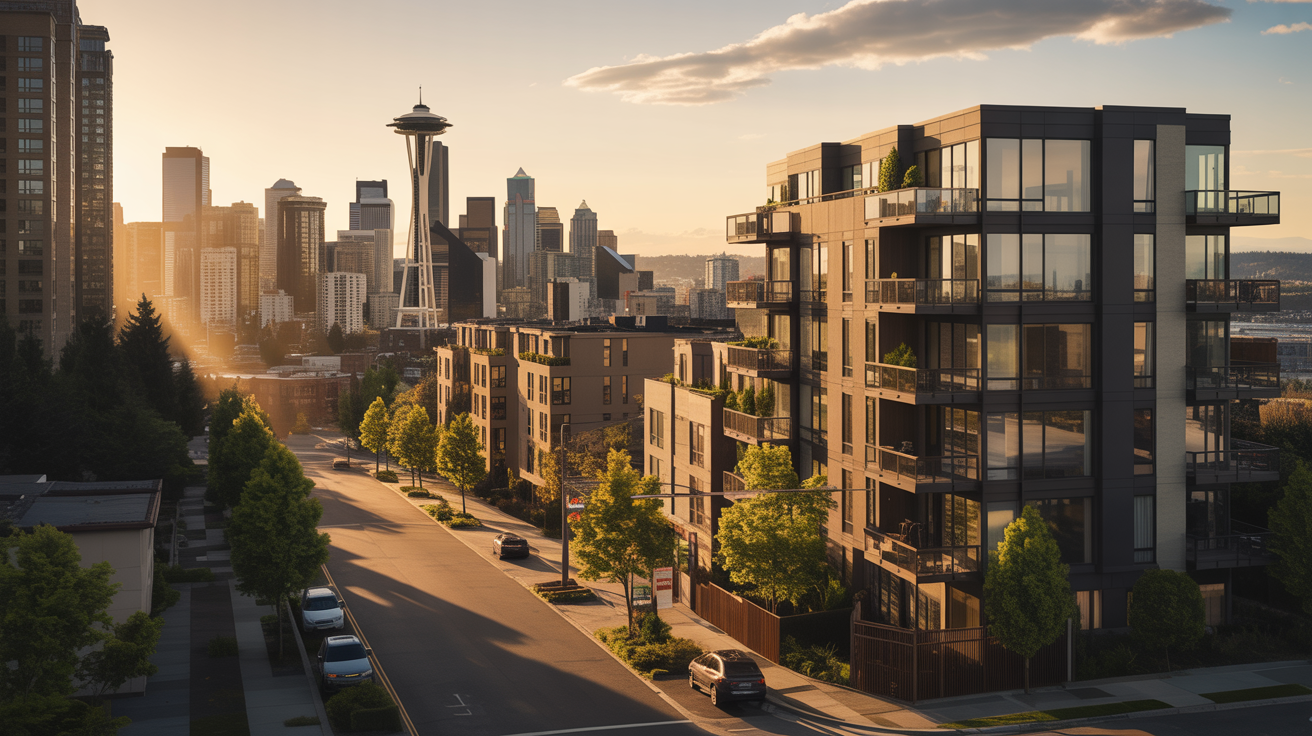
Stripe has quietly built one of the most coveted engineering offices in Seattle, drawing hundreds of talented engineers, product managers, and designers to the downtown core. If you've recently joined Stripe—or are about to—finding the right home is likely at the top of your priority list. Seattle's neighborhoods each have a distinct personality, and the one you pick will shape your daily commute, your weekends, and your long-term investment.
This guide breaks down the best neighborhoods for Stripe employees based on commute time, median home prices, lifestyle fit, and long-term appreciation potential. Whether you're a new grad looking for a walkable condo or a senior engineer seeking a family-friendly home with a yard, there's a neighborhood here that fits.
Where Is Stripe's Seattle Office?
Stripe's Seattle presence is centered in the downtown Seattle / South Lake Union corridor, placing it in the heart of the city's tech ecosystem alongside Amazon, Meta, and Google offices. This prime location means you have excellent access to public transit (Link Light Rail, bus routes, the streetcar) and a short commute from many of Seattle's most desirable urban neighborhoods.
The office's central positioning is a major advantage: unlike employees at Eastside companies who face bridge traffic, Stripe employees can live in some of Seattle's most vibrant, walkable neighborhoods and still be at their desk in under 20 minutes.
Top 6 Neighborhoods for Stripe Employees
1. South Lake Union — Walk to Work
| Commute | 5–10 min walk / bike |
| Median Condo Price | $550K–$800K |
| Median Townhome | $750K–$1.1M |
| Best For | Singles, couples, zero-commute lifestyle |
South Lake Union is the obvious choice if eliminating your commute is the priority. The neighborhood has transformed over the past decade from an industrial zone into a gleaming urban village packed with restaurants, rooftop bars, and waterfront parks. New-construction condos dominate the market, many with views of Lake Union and the Space Needle.
The trade-off: SLU is expensive per square foot and can feel corporate during the week. Families with kids may find the neighborhood lacks green space and established school communities. But for a young professional or couple who values walkability and nightlife proximity, it's unbeatable.
2. Capitol Hill — Culture Meets Convenience
| Commute | 10–15 min by bus or bike; 5 min by Link Light Rail |
| Median Condo Price | $450K–$700K |
| Median SFH Price | $900K–$1.3M |
| Best For | Young professionals, creatives, urban lifestyle lovers |
Capitol Hill is Seattle's cultural epicenter—independent coffee shops, live music venues, bookstores, and a diverse, eclectic community. The Capitol Hill Link Light Rail station puts you at Westlake (a short walk from Stripe's office) in about 5 minutes, making it one of the fastest transit commutes in the city.
Condos on the Hill offer strong value compared to SLU, and the neighborhood's character is hard to replicate. Craftsman houses on the quieter streets east of Broadway offer charm and appreciation potential, though they often come with bidding wars. If you value walkability, nightlife, and a neighborhood that actually feels like a community rather than a tech campus, Capitol Hill is your pick.
3. Fremont — Quirky, Green, and Family-Friendly
| Commute | 12–20 min by bus or bike along the Burke-Gilman Trail |
| Median SFH Price | $850K–$1.2M |
| Median Townhome | $650K–$900K |
| Best For | Young families, cyclists, those who want character |
Self-proclaimed "Center of the Universe," Fremont is one of Seattle's most beloved neighborhoods. The Sunday Market, the Fremont Troll, craft breweries, and a strong community feel make it a favorite for tech workers who want more personality than SLU but still want to be close to downtown.
The Burke-Gilman Trail runs directly through Fremont and connects to SLU, making bike commuting fast and scenic. Homes here are a mix of Craftsman-era single-family houses and newer townhomes, with pricing that's slightly more accessible than Capitol Hill for equivalent square footage.
4. Ballard — Space, Breweries, and Strong Schools
| Commute | 20–30 min by bus (RapidRide D) or bike |
| Median SFH Price | $800K–$1.15M |
| Median Condo/Townhome | $500K–$800K |
| Best For | Families, homebrewers, boat lovers, long-term buyers |
Ballard offers the best balance of urban energy and residential calm in Seattle. The neighborhood's Scandinavian roots show in its tidy streets and maritime vibe, but the modern Ballard is defined by its brewery district, excellent restaurants along Ballard Avenue, and Golden Gardens beach park.
For Stripe employees with families—or anyone planning to start one—Ballard's schools (including Adams Elementary and Salmon Bay K-8) are among the city's best. The real estate market here offers more single-family homes with yards compared to Capitol Hill or SLU, and prices are competitive for the amount of space you get. The RapidRide D Line provides a direct bus route to downtown.
5. Queen Anne — Views, Parks, and a Village Feel
| Commute | 10–15 min by bus; 15–20 min walk from Lower QA |
| Median SFH Price | $950K–$1.5M (Upper), $700K–$1M condo (Lower) |
| Best For | Professionals wanting proximity + neighborhood charm |
Queen Anne is actually two neighborhoods in one. Lower Queen Anne (often called Uptown) sits right next to SLU and the Seattle Center, offering condos with quick commutes and proximity to the Monorail, museums, and Climate Pledge Arena. Upper Queen Anne is a hilltop village with some of the best views in the city—panoramic shots of the Space Needle, downtown, and Mount Rainier from Kerry Park.
Upper Queen Anne's tree-lined streets feel worlds away from tech-campus SLU, but you're only a 10-minute bus ride from the office. It's an excellent choice for buyers who want the feel of a small town inside the city.
6. Wallingford — The Quiet Family Pick
| Commute | 15–25 min by bus (44, 62) or bike |
| Median SFH Price | $900K–$1.3M |
| Best For | Families, quiet-neighborhood seekers, long-term investors |
Wallingford is one of Seattle's most stable residential neighborhoods—bungalows, mature trees, excellent walkability to local shops on 45th Street, and proximity to Gas Works Park and Green Lake. It doesn't have the flashy nightlife of Capitol Hill or the trendiness of Ballard, but it's the kind of neighborhood where families put down roots for decades.
For Stripe employees with children, Wallingford's John Stanford International School (a highly rated public elementary with language immersion programs) is a major draw. Home values here have appreciated steadily, and inventory is tight—homes sell fast because residents rarely leave.
Side-by-Side Neighborhood Comparison
| Neighborhood | Commute | Entry Price | Vibe | Family-Friendly |
|---|---|---|---|---|
| South Lake Union | 5–10 min | $550K | Urban / Modern | ⭐⭐ |
| Capitol Hill | 5–15 min | $450K | Cultural / Eclectic | ⭐⭐⭐ |
| Fremont | 12–20 min | $650K | Quirky / Green | ⭐⭐⭐⭐ |
| Ballard | 20–30 min | $500K | Maritime / Brewery | ⭐⭐⭐⭐⭐ |
| Queen Anne | 10–20 min | $700K | Village / Views | ⭐⭐⭐⭐ |
| Wallingford | 15–25 min | $900K | Quiet / Residential | ⭐⭐⭐⭐⭐ |
Financial Strategies for Stripe Employees
Understanding Your Stripe Compensation Package
Stripe's compensation is highly competitive, especially for engineers and senior ICs. A typical L3/L4 software engineer in Seattle earns:
- Base salary: $170,000–$220,000
- RSU grants: $150,000–$400,000 over 4 years (varies by level)
- Annual bonus: Variable, typically 5–15% of base
- Signing bonus: $20,000–$50,000 (common for experienced hires)
For a mid-level engineer at Stripe earning $200K base + $75K/year in vesting RSUs, total annual compensation is around $275,000–$300,000. In Washington State—with no state income tax—your take-home is substantially higher than peers in California or New York.
Using Stripe RSUs for Your Down Payment
Stripe went public via direct listing, and RSU liquidity is now straightforward. Your vested shares can be sold on the open market and converted to cash for a down payment. Key considerations:
- Vesting schedule: Stripe typically uses a 4-year vest with a 1-year cliff, then quarterly vesting. Time your home search around your largest vesting events.
- Tax withholding: RSUs are taxed as ordinary income at vesting. Your net proceeds after tax will be roughly 60–65% of the gross vest value. Plan your down payment amount accordingly.
- Sell-to-cover vs. sell all: If you're saving for a down payment, consider selling all shares at vest rather than holding. In an expensive market, having cash in hand beats speculating on further stock appreciation.
- Mortgage qualification: Lenders will count RSU income if you have a 2-year history. If you're newer at Stripe, your base salary alone may still qualify you for $800K–$1M+ depending on debt ratios.
Pro Tip: Signing Bonus Strategy
If you received a signing bonus, consider depositing it directly into a high-yield savings account earmarked for your down payment. A $30K–$50K signing bonus, combined with 1–2 years of RSU vests and monthly savings, can get you to a 20% down payment on a $800K–$1M property faster than you think.
What Can You Actually Afford?
Here's a realistic look at purchasing power for Stripe employees at different levels:
| Level | Total Comp (est.) | Comfortable Purchase Price | Best Neighborhood Fit |
|---|---|---|---|
| New Grad (L2) | $180K–$220K | $500K–$700K | Capitol Hill condo, SLU studio/1BR |
| Mid-Level (L3) | $275K–$325K | $750K–$1M | Fremont townhome, Ballard condo |
| Senior (L4) | $350K–$450K | $1M–$1.4M | Ballard SFH, Queen Anne, Wallingford |
| Staff+ (L5+) | $500K+ | $1.4M+ | Upper Queen Anne, Wallingford SFH, Magnolia |
These estimates assume a 20% down payment, current interest rates around 6.5%, and a debt-to-income ratio under 36%. With Stripe's strong compensation, even mid-level employees can afford to buy in most Seattle neighborhoods—especially with the ESPP and RSU accumulation strategies we've outlined in other articles.
Commute Deep Dive: Getting to Stripe's Downtown Office
One of the biggest perks of working at Stripe's Seattle office is that you don't need to cross a bridge. Here's how each neighborhood connects:
- Link Light Rail: Capitol Hill → Westlake in 5 minutes. The most reliable transit option. The upcoming Ballard Link extension (expected 2039) will eventually connect Ballard directly.
- Bike commute: The Burke-Gilman Trail connects Fremont, Wallingford, and Ballard to SLU. Many Stripe employees bike year-round with proper rain gear—it's a flat, protected route.
- Bus (RapidRide): The D Line (Ballard → downtown) and the 62 (Wallingford → downtown) are frequent and reliable. Metro's real-time tracking makes bus commuting predictable.
- Walking: From South Lake Union or Lower Queen Anne, you can walk to the office in under 15 minutes. No car required.
- Driving: Honestly, driving from any of these neighborhoods is the worst option—parking downtown is expensive ($250–$400/month) and traffic is unpredictable. Save the car for weekends.
Consider Going Car-Free
Many Stripe employees living in Capitol Hill, SLU, or Fremont go completely car-free. Between transit, cycling, and ride-shares, you can save $800–$1,200/month on car payments, insurance, gas, and parking. That's an extra $10,000–$14,000 per year toward your down payment fund.
The Seattle Market in 2026: What Stripe Buyers Should Know
Seattle's real estate market remains competitive but has shifted from the frenzy of 2021–2022. Key trends for 2026:
- Inventory is improving: More condos and townhomes are hitting the market in SLU, Capitol Hill, and Ballard, giving buyers more options and slightly more negotiating power.
- Interest rates hovering around 6.0–6.5%: Higher than the 3% days, but still historically normal. Don't wait for rates to drop—learn to compete effectively at current rates.
- Appreciation remains steady: Seattle home values are appreciating at 4–6% annually. Buying now means building equity immediately rather than watching prices climb while you rent.
- Condos are the entry point: With median condo prices in Capitol Hill and Ballard starting around $450K–$550K, a Stripe employee can enter the market with as little as $90K–$110K down (20%).
Your Next Steps
- Get pre-approved: Work with a lender experienced in tech compensation. They'll know how to properly document RSU income and maximize your qualifying amount.
- Explore neighborhoods in person: Spend weekends walking Capitol Hill, biking through Fremont, and grabbing coffee in Ballard. Each neighborhood has a personality you need to experience firsthand.
- Align your timeline with your vesting schedule: If a large RSU vest is coming in the next 3–6 months, plan your purchase around that liquidity event.
- Connect with a tech-savvy agent: Not all real estate agents understand RSU documentation, tech comp structures, or the unique needs of Stripe employees. Work with someone who speaks your language.
Ready to Find Your Seattle Home?
I specialize in helping tech employees at Stripe and other Seattle-based companies find the right home in the right neighborhood. Whether you're eyeing a Capitol Hill condo or a Ballard family home, I'll help you navigate the market, leverage your compensation, and close with confidence.