REI Employee Home Buying Guide: Green Living in Seattle Area
2025-12-23•By Peter J Kim
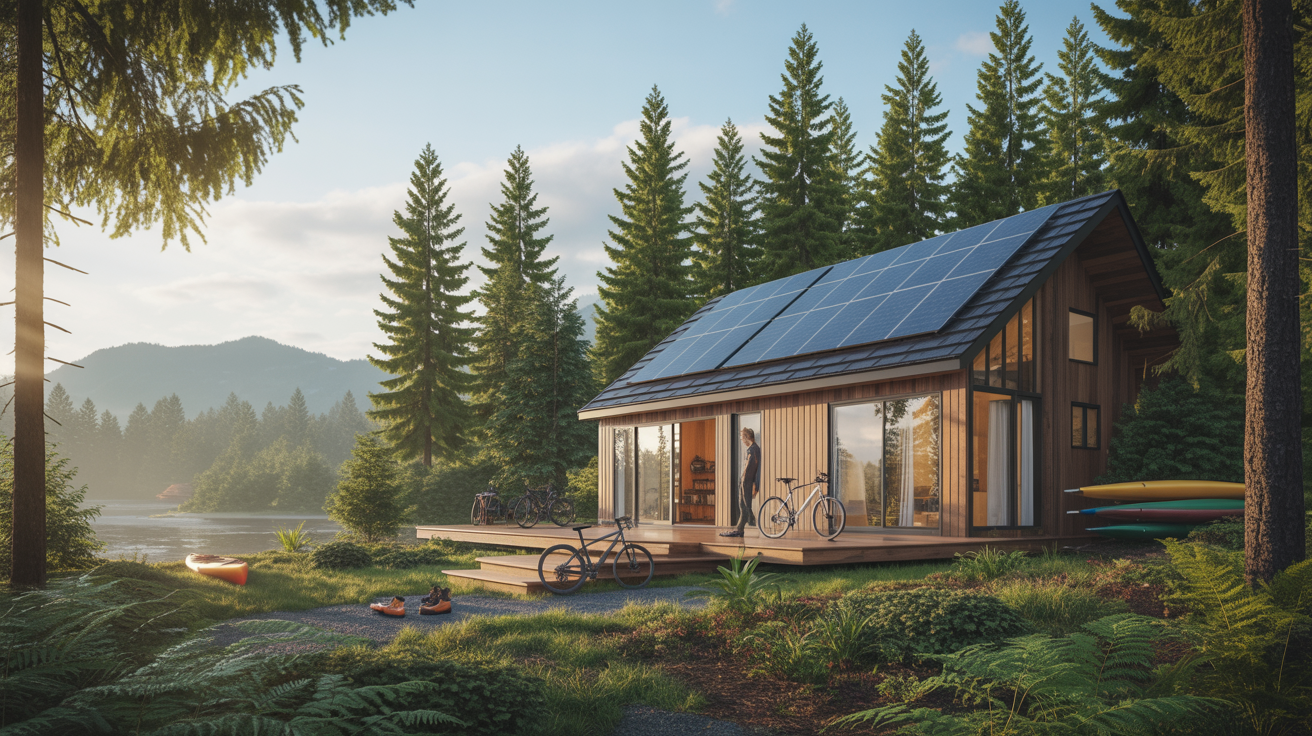
# REI Employee Home Buying Guide: Green Living in Seattle Area For REI employees, buying a home is more than a financial transaction—it's an opportunity to align your living space with the values that drew you to the co-op in the first place. Whether you're working at the Kent headquarters or one of REI's retail locations, the Greater Seattle area offers exceptional opportunities to embrace sustainable living while enjoying unparalleled access to outdoor recreation. This comprehensive guide will help you navigate the intersection of green home buying, sustainable neighborhoods, and the active lifestyle that defines the REI community. ## Understanding REI's Culture and How It Shapes Your Home Search REI's corporate culture is built on a foundation of environmental stewardship, outdoor passion, and community engagement. This "Co-op Way" isn't just workplace philosophy—it's a lifestyle that naturally extends to where and how you choose to live. ### REI's Commitment to Sustainability As an REI employee, you're part of an organization that has consistently demonstrated leadership in environmental responsibility. The company's annual stewardship reports detail commitments to reducing carbon emissions, supporting conservation efforts, and promoting sustainable practices throughout its operations. This same ethos can guide your home buying decisions, from choosing energy-efficient properties to selecting neighborhoods with strong environmental values. ### Employee Benefits That Support Your Home Search While REI doesn't offer specific housing assistance programs, several employee benefits can support your home buying journey and sustainable lifestyle: **Public Transit Subsidy**: REI provides a 50% pre-tax subsidy on transit expenses (buses, trains, vanpools, ferries) up to the IRS limit. This substantial benefit makes choosing a transit-accessible home more financially attractive and supports a car-light lifestyle. **Yay Days**: Two paid days off annually for outdoor activities or stewardship projects give you time to explore neighborhoods and assess their proximity to trails, parks, and recreation areas. **#OptOutside**: The paid Black Friday holiday provides another opportunity to experience potential neighborhoods during a typically busy shopping day, seeing them at their most authentic. **Employee Discounts**: Substantial gear discounts help you outfit your home for outdoor adventures and make it easier to embrace an active lifestyle from your new basecamp. **Sabbatical Program**: After 15 years (and every 5 years thereafter), a four-week paid sabbatical offers extended time for major outdoor adventures—a benefit that becomes even more valuable when you live in a location with easy access to wilderness. ## The Seattle Area's Green Home Landscape The Greater Seattle region stands at the forefront of sustainable residential development in the United States. Driven by environmentally conscious buyers, progressive building codes, and innovative developers, the area offers an impressive array of green housing options. ### Why Seattle is a Green Building Leader Several factors have positioned Seattle as a national leader in sustainable housing: - **Progressive Building Codes**: Seattle's energy codes are among the most stringent in the nation, ensuring that even standard new construction performs well above national averages. - **Strong Market Demand**: A high concentration of environmentally conscious buyers creates robust demand for green features, making them valuable for resale. - **Innovative Builders**: Local developers like YS Development specialize in high-performance homes that exceed code requirements by 50% or more. - **Municipal Support**: Programs like Priority Green Expedited (relaunching in 2025) fast-track permits for certified green projects. - **Climate Advantages**: The Pacific Northwest's mild climate makes achieving high energy efficiency more cost-effective than in extreme climates. ### Green Home Market Trends for 2025 The sustainable home market in the Seattle area continues to evolve: - **Certification is Standard**: In new construction, green certifications (LEED, Built Green, Passive House) are increasingly expected rather than exceptional. - **Solar Ready is Common**: Most new homes include conduit and electrical infrastructure for future solar installation. - **Heat Pumps Dominate**: Electric heat pumps have become the standard for heating and cooling in new construction, replacing gas furnaces. - **Water Conservation**: Low-flow fixtures and smart irrigation systems are now baseline features in quality construction. - **Indoor Air Quality Focus**: Low-VOC materials and advanced ventilation systems address growing awareness of indoor environmental health. ## Understanding Green Building Certifications For REI employees seeking verifiable environmental performance, third-party certifications provide clear standards. Understanding these programs is essential for evaluating properties and making informed decisions. ### LEED (Leadership in Energy and Environmental Design) **What It Is**: The most widely recognized green building certification globally, administered by the U.S. Green Building Council. **How It Works**: Projects earn points across multiple categories (energy, water, materials, indoor quality, site sustainability) to achieve Certified, Silver, Gold, or Platinum levels. **Seattle-Specific Update**: As of April 2025, projects subject to the 2021 Seattle Energy Code must achieve LEED Platinum (not just Gold) to qualify for certain city incentives—reflecting the strength of Washington's base energy codes. **What It Means for Buyers**: - LEED Platinum homes represent the highest level of comprehensive sustainability - Certification verifies performance across multiple environmental dimensions - Resale value tends to be strong due to brand recognition - Expect 30-50% lower energy costs than conventional homes ### Built Green **What It Is**: A regional certification program particularly relevant in King and Snohomish counties, using a checklist-based point system. **Certification Levels**: Three-star, four-star, or five-star ratings based on points earned. **Recent Updates**: Built Green now incorporates embodied carbon reduction requirements for 4-Star certification, addressing emissions from manufacturing and transporting materials. **What It Means for Buyers**: - Well-aligned with local construction practices and codes - 4-Star Built Green often matches LEED Platinum energy performance - Strong recognition among local builders and buyers - Typically more affordable to achieve than LEED, potentially offering better value ### Passive House (Phius) **What It Is**: The most rigorous performance-based standard, focusing on creating virtually airtight, highly insulated building envelopes. **Key Features**: - Exceptional insulation (often 2-3x code requirements) - Airtight construction (verified by blower door testing) - Heat recovery ventilation systems - High-performance windows and doors **Performance**: Passive House buildings use 40-80% less energy for heating and cooling than conventional buildings. **What It Means for Buyers**: - Lowest possible utility bills - Superior comfort (no drafts, consistent temperatures) - Excellent indoor air quality - Higher upfront cost but fastest payback through energy savings - Ideal for REI employees prioritizing maximum environmental impact reduction ### Comparing Certifications: Which is Right for You? | Certification | Best For | Energy Savings | Typical Premium | Resale Recognition | |--------------|----------|----------------|-----------------|-------------------| | LEED Platinum | Comprehensive sustainability across all dimensions | 30-50% | 5-10% | Excellent (national) | | Built Green 4-5 Star | Local market value, embodied carbon focus | 30-50% | 3-7% | Excellent (regional) | | Passive House | Maximum energy efficiency, comfort | 40-80% | 8-15% | Growing (specialist buyers) | ## Essential Sustainable Home Features for 2025 Beyond certifications, understanding specific green features helps you evaluate any property's environmental performance and long-term value. ### High-Performance Building Envelope The building envelope—walls, roof, windows, and foundation—is the first line of defense against energy loss. **Advanced Insulation**: - Recycled denim, cellulose, or sheep's wool insulation - R-values significantly exceeding code minimums - Continuous insulation eliminating thermal bridges - Properly insulated foundations and crawl spaces **Air Sealing**: - Meticulous sealing of gaps around windows, doors, and penetrations - Blower door testing to verify airtightness - Reduces drafts and improves comfort - Prevents moisture intrusion and mold issues **High-Performance Windows**: - Triple-pane glazing (or high-quality double-pane) - Low-E coatings to reflect heat - Argon or krypton gas fills - Insulated frames (fiberglass or vinyl) - Proper installation with sealed flanges **Impact**: A high-performance envelope can reduce heating and cooling costs by 40-60% compared to code-minimum construction. ### Renewable Energy Systems **Solar Photovoltaic (PV) Systems**: - Rooftop or ground-mounted panels - Typical residential system: 5-10 kW - Can offset 50-100% of electricity use - 25-30 year lifespan with minimal maintenance **Solar Ready Infrastructure**: - Conduit from attic/roof to electrical panel - South-facing roof orientation - Structural capacity for panel weight - Allows future installation without major retrofitting **Battery Storage**: - Tesla Powerwall, LG Chem, or similar systems - Stores excess solar production for evening use - Provides backup power during outages - Maximizes solar self-consumption **Heat Pumps**: - Air-source heat pumps for heating and cooling - 2-4x more efficient than gas furnaces - Ductless mini-splits or ducted systems - Ideal when powered by solar electricity **Impact**: A properly sized solar system can eliminate electricity bills and provide energy independence. Combined with heat pumps, it creates an all-electric, zero-carbon home. ### Water Conservation Systems **Indoor Water Efficiency**: - WaterSense-certified fixtures (20%+ water savings) - Low-flow faucets (1.5 GPM or less) - High-efficiency showerheads (2.0 GPM or less) - Dual-flush toilets (0.8/1.6 GPF) - ENERGY STAR dishwashers and washing machines **Outdoor Water Management**: - Rainwater harvesting systems (500-5,000 gallon tanks) - Greywater recycling for landscape irrigation - Smart irrigation controllers using weather data - Drought-tolerant native landscaping - Permeable paving to reduce runoff **Impact**: Comprehensive water conservation can reduce household water use by 30-50%, lowering utility bills and environmental impact. ### Sustainable Materials and Indoor Air Quality **Healthy Interior Finishes**: - Low-VOC or zero-VOC paints - Formaldehyde-free cabinetry and millwork - Natural linoleum or cork flooring - Solid hardwood or bamboo (rapidly renewable) - Wool carpeting (if carpet is desired) **Advanced Ventilation**: - Heat Recovery Ventilators (HRV) or Energy Recovery Ventilators (ERV) - Continuous fresh air supply - Removes indoor pollutants without energy loss - Critical in airtight homes **Biophilic Design**: - Large windows maximizing natural light - Indoor-outdoor connections (decks, patios) - Living walls or abundant houseplants - Natural materials (wood, stone) - Views of nature from living spaces **Impact**: Healthy materials and proper ventilation create superior indoor air quality, reducing allergies, asthma, and sick building syndrome while connecting occupants to nature. ## Financial Incentives and Green Financing Washington State and federal programs offer substantial financial support for green home purchases and upgrades, making sustainable homeownership more accessible. ### Washington State Housing Finance Commission Programs **EnergySpark Program**: - Interest rate discount on mortgages for energy-efficient homes - Applies to new homes with NEEM/Energy Star, LEED, Built Green, DOE Zero Energy Ready, or Passive House certification - Also available for existing homes with commitment to 10%+ energy reduction through renovations - Can be combined with other WSHFC programs **Home Advantage DPA**: - Down payment assistance up to 4% of loan amount (5% for certain loans) - Second mortgage with 30-year deferred payments - Helps reduce upfront costs for qualified buyers **Opportunity DPA**: - Up to $15,000 down payment assistance - 1% interest rate with deferred payments - Paired with House Key Opportunity first mortgage **Eligibility**: - Income limits apply (vary by county and household size) - Credit score minimums (typically 620-640) - Homebuyer education course required - First-time buyer status for some programs ### Federal and State Solar Incentives **Residential Clean Energy Credit (Federal ITC)**: - 30% tax credit on total solar system cost - Includes equipment, installation labor, and battery storage (>3 kWh) - **Critical Update**: Recent 2025 legislation accelerated termination; 30% credit ends after 2025 - Act quickly if considering solar installation **Washington Solar Sales Tax Exemption**: - 100% exemption from state sales tax on solar equipment and installation - Applies to systems up to 100 kW - Available through December 2029 - Can save $2,000-$5,000 on typical residential system **Net Energy Metering (NEM)**: - 1-to-1 credit for excess solar electricity sent to grid - Bank credits during summer for use in winter - Credits typically reset annually on March 31 - Makes solar financially viable even with seasonal production variation **Community Solar and Solar for All**: - Community Solar Expansion Program (CSEP) for low-income residents (currently facing budget constraints) - Solar for All (SFA) program paused in August 2025 but state working to reinstate - Monitor program status if you qualify based on income ### Calculating Your Green Home Investment **Example Scenario: REI Employee Purchasing Built Green 4-Star Home** Purchase Price: $750,000 - EnergySpark rate discount: 0.25% = ~$90/month savings - Home Advantage DPA: $30,000 (4%) = reduces down payment need - Annual energy savings vs. conventional home: $1,800 - Annual water savings: $300 - Total first-year savings: $2,100 + $1,080 mortgage savings = $3,180 **Solar Addition (if not included)**: - System cost: $25,000 - Federal tax credit (30%): -$7,500 - WA sales tax exemption: -$2,250 - Net cost: $15,250 - Annual electricity savings: $1,500 - Payback period: ~10 years - 25-year savings: $22,500 **Total 30-Year Financial Impact**: - Mortgage savings: $32,400 - Energy savings: $54,000 (assuming 3% annual utility inflation) - Water savings: $9,000 - Solar savings: $22,500 - **Total savings: $117,900** This doesn't include increased resale value, which studies show can be 3-5% higher for certified green homes. ## Eco-Friendly Neighborhoods Near REI Kent Headquarters Choosing where to live involves balancing commute considerations, neighborhood character, and access to the outdoor lifestyle that defines REI culture. ### Commuting to Kent: Your Options **Public Transit**: - King County Metro operates bus routes connecting Kent to Seattle, Federal Way, and regional hubs - Free DART shuttle within Kent connects downtown to East Hill - REI's 50% transit subsidy makes public transportation highly cost-effective - Use King County Metro trip planner for route optimization **Sustainable Commute Strategies**: - Vanpooling through King County Metro (subsidized by REI) - Carpooling with coworkers - Bike + transit combinations - Electric vehicle with workplace charging (if available) ### Seattle Neighborhoods: Urban Green Living For REI employees willing to commute from Seattle to Kent, several neighborhoods offer exceptional walkability, bikeability, and environmental values. **Ballard** (Bike Score: 91 - "Biker's Paradise") - Vibrant restaurant and brewery scene - Easy access to Burke-Gilman Trail - Strong community focus on sustainability - Farmers market and local food culture - Median home price: $850,000-$1.1M **Fremont** (Bike Score: 88) - Quirky, artistic community - Excellent bike infrastructure - Close to Burke-Gilman Trail - Urban village with local shops - Median home price: $900,000-$1.2M For more on Seattle urban neighborhoods, see our guide on [Capitol Hill vs Fremont for young tech professionals](/blog/seattle-capitol-hill-vs-fremont-urban-living-for-young-tech-professionals). **Green Lake** (Bike Score: 85) - Centered around beautiful Green Lake Park - 2.8-mile loop popular with runners and cyclists - Strong outdoor recreation culture - Family-friendly with excellent schools - Median home price: $950,000-$1.3M **Wallingford** (Bike Score: 84) - Residential neighborhood with local character - Gas Works Park on Lake Union - Burke-Gilman Trail access - Walkable commercial district - Median home price: $900,000-$1.25M **University District** (Bike Score: 82) - Transit-rich with light rail access - Burke-Gilman Trail runs through neighborhood - Diverse, urban environment - More affordable than other Seattle neighborhoods - Median home price: $650,000-$850,000 ### Eastside Suburbs: Family-Friendly Green Living **Issaquah** - Gateway to Cascade foothills - Immediate access to hiking (Tiger Mountain, Squak Mountain) - Strong environmental values in community - Top-rated schools - Shorter commute to Kent than Seattle - Median home price: $1.1M **Sammamish** - Large lots with room for gardens and solar - Excellent schools - Access to trails and parks - Family-oriented community - Moderate commute to Kent - Median home price: $1.59M **Renton** - Closer proximity to Kent (shorter commute) - More affordable than Seattle or Eastside suburbs - Access to Lake Washington and Cedar River Trail - Growing downtown with new development - Median home price: $700,000-$850,000 ## Outdoor Recreation Access: Your Home as Basecamp For REI employees, proximity to outdoor recreation isn't a luxury—it's essential. The Seattle area offers unparalleled access to diverse outdoor experiences. ### Urban Parks and Trails **Burke-Gilman Trail**: - Nearly 20 miles of paved multi-use path - Connects Puget Sound to Lake Washington - Runs through multiple Seattle neighborhoods - Perfect for bike commuting, running, and casual rides **Discovery Park** (Seattle's largest): - 534 acres of forest, meadows, and beaches - Miles of trails with Puget Sound views - Two miles of protected tidal beaches - Wildlife viewing opportunities **Green Lake Park**: - 2.8-mile loop around the lake - Kayak and paddleboard rentals - Swimming beach - Community gathering place **Alki Beach Park** (West Seattle): - 2.5-mile paved path along Puget Sound - Beach volleyball, fire pits - Stunning Olympic Mountain views - Water sports rentals ### Mountain Recreation **Hiking** (30-60 minutes from Seattle): - Mount Si (8-mile round trip, 3,150' gain) - Rattlesnake Ledge (4 miles, 1,160' gain) - Little Si (4.7 miles, 1,300' gain) - Tiger Mountain (multiple trail options) - Mailbox Peak (challenging 9.4 miles, 4,000' gain) **Skiing and Snowboarding** (60-90 minutes): - Snoqualmie Pass (Summit, Alpental, West, Central) - Stevens Pass - Crystal Mountain - Backcountry access throughout Cascades **Climbing**: - Exit 38 and 32 (roadside bouldering) - Index Town Walls - Leavenworth (2.5 hours) - Vertical World and Stone Gardens (indoor gyms) ### Water Recreation **Kayaking and Paddleboarding**: - Lake Union (urban paddling) - Lake Washington (larger water, island exploration) - Puget Sound (sea kayaking, wildlife) - Numerous rental outfitters and clubs **Sailing**: - Lake Washington and Lake Union - Puget Sound - Active sailing community and clubs **Fishing**: - Salmon fishing in Puget Sound - Trout fishing in mountain lakes - Steelhead in rivers ### Year-Round Adventure The Seattle area's mild climate allows year-round outdoor activity: - **Spring**: Hiking, biking, paddling - **Summer**: Backpacking, climbing, water sports - **Fall**: Peak hiking season, trail running - **Winter**: Skiing, snowshoeing, winter hiking ## Making Your Green Home Decision Choosing the right home involves balancing multiple factors: environmental performance, location, budget, and lifestyle fit. ### Your Green Home Checklist **Certification and Performance**: - [ ] Third-party green certification (LEED, Built Green, Passive House) - [ ] Energy performance data (HERS score, EUI) - [ ] Utility bill history from seller - [ ] Solar system (existing or solar-ready infrastructure) - [ ] High-performance windows and insulation **Sustainable Features**: - [ ] Heat pump heating/cooling - [ ] Low-VOC materials and finishes - [ ] Water-efficient fixtures - [ ] Advanced ventilation system - [ ] Sustainable flooring and materials **Location and Lifestyle**: - [ ] Commute time and options to Kent HQ - [ ] Transit access and REI subsidy applicability - [ ] Walkability and bikeability scores - [ ] Proximity to trails, parks, and outdoor recreation - [ ] Community values alignment **Financial Considerations**: - [ ] Eligibility for EnergySpark or other green financing - [ ] Down payment assistance options - [ ] Solar incentive timing (act before 2026 for 30% federal credit) - [ ] Long-term utility cost projections - [ ] Resale value considerations ### Questions to Ask Sellers and Agents 1. **What green certifications does the home have?** Request documentation. 2. **What are the actual utility costs?** Ask for 12 months of bills. 3. **Has a home energy audit been performed?** Request the report. 4. **What is the HERS score?** (Lower is better; 100 is standard new construction, 0 is net-zero) 5. **Are there any solar or energy efficiency warranties?** Understand coverage and transferability. 6. **What sustainable features are included?** Get specifics on insulation R-values, window U-factors, etc. 7. **Is the home solar-ready?** Check for conduit and electrical capacity. 8. **What is the water usage?** Request water bills if available. 9. **Have there been any environmental issues?** (Mold, radon, lead, asbestos) 10. **What is the neighborhood's environmental character?** (Recycling programs, community gardens, etc.) ## Working with a Real Estate Agent Who Understands Your Values As an REI employee, you need a real estate agent who understands both the technical aspects of green homes and the lifestyle priorities that matter to you. ### How I Support REI Employees **Green Home Expertise**: - Deep knowledge of certifications and what they mean - Ability to evaluate sustainable features and their value - Connections with green builders and inspectors - Understanding of energy performance metrics **Lifestyle Alignment**: - Personal passion for outdoor recreation - Knowledge of trail access and recreation opportunities - Understanding of bike/transit commute options - Appreciation for environmental values **Financial Guidance**: - Expertise in green financing programs - Coordination with lenders familiar with EnergySpark and DPA programs - Timing advice for solar incentives - Long-term cost-benefit analysis **Local Market Knowledge**: - Tracking of green home inventory and trends - Neighborhood expertise across Seattle and Eastside - Understanding of commute patterns to Kent - Insight into resale value of sustainable features ### Let's Find Your Sustainable Basecamp Whether you're looking for a Passive House in Ballard, a Built Green home in Issaquah, or a solar-powered retreat in Sammamish, I'm here to help you find a home that aligns with your values and supports your lifestyle. **Contact Peter J Kim** - **Email**: [email protected] - **Phone**: 425-409-3823 - **Service Areas**: Seattle, Bellevue, Redmond, Kirkland, Issaquah, Sammamish, Kent Let's start the conversation about finding your perfect green home in the Greater Seattle area. ## Conclusion: Living Your Values Through Homeownership As an REI employee, you're part of a community that believes in protecting the places we love to play. Choosing a sustainable home is a powerful way to live those values every day, reducing your environmental footprint while creating a healthy, comfortable space for your family. The Greater Seattle area offers exceptional opportunities for green living, from cutting-edge Passive House construction to established neighborhoods with strong environmental values. With robust financial incentives, a growing inventory of certified green homes, and unparalleled access to outdoor recreation, there's never been a better time to make your sustainable homeownership dreams a reality. Your home is more than shelter—it's your basecamp for adventure, your contribution to a sustainable future, and your stake in the community you love. Let's find the perfect place for you to call home. **#OptOutside starts at home. Let's find yours.**